Securing a residential or commercial property requires deliberate intervention to neutralize destructive organisms before structural colonization occurs. EmberVale Exterminators delivers targeted pest control service in Columbus to halt insect incursions, evict burrowing vermin, and seal architectural breaches.
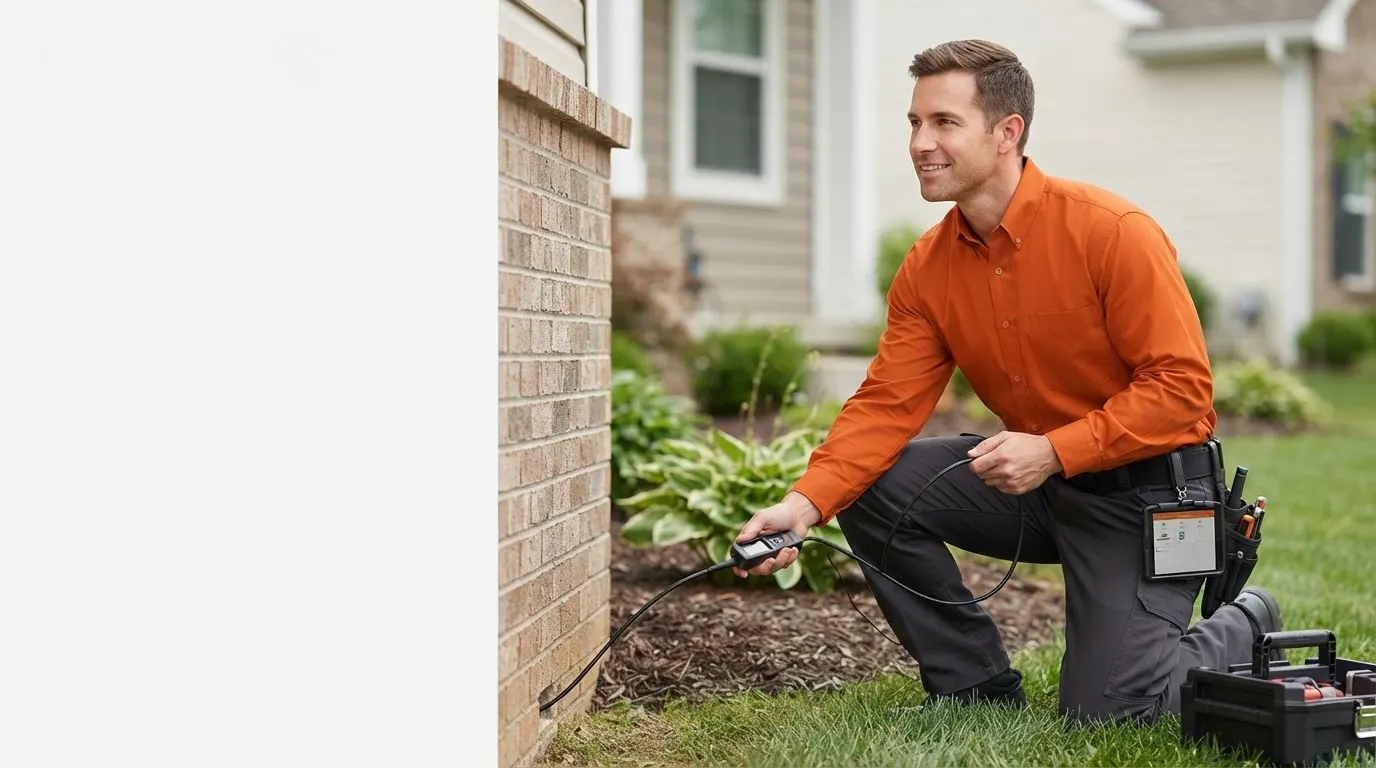
A pest control service company in Columbus is an integrated environmental management provider that inspects, eliminates, and structurally excludes invasive organisms from residential and commercial buildings across Franklin County.
Every service reflects the same meticulous attention to detail, whether it's a single job or a larger pest control service project across Columbus.
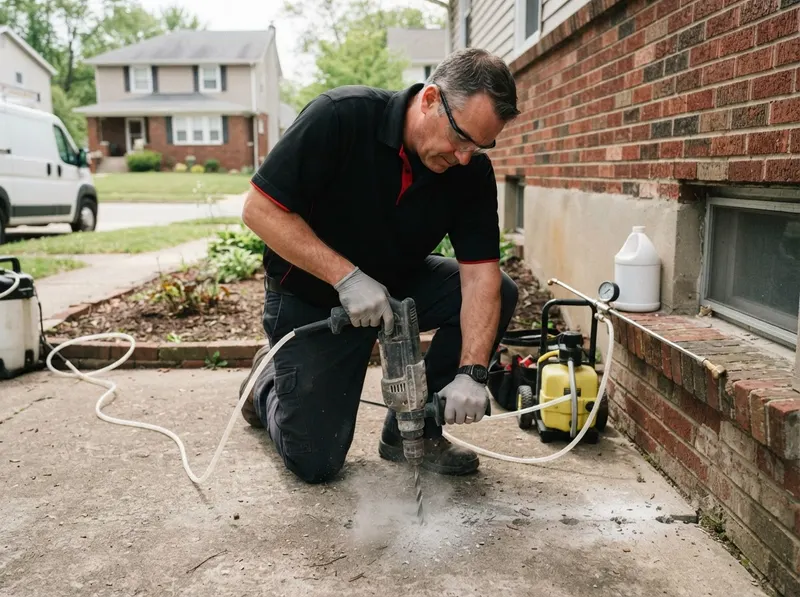
Subterranean termites (Reticulitermes flavipes) exploit damp sub-slab conduits, settling cracks, and sill plates throughout the moist river valleys of Central Ohio. This targeted remediation program deploys non-repellent liquid termiticides, compliant with standards from the United States Environmental Protection Agency , alongside continuous subterranean monitoring stations installed at critical structural junctures. Technicians trench foundation margins down to the footing and inject liquid barriers under pressurized slab conduits to eliminate foraging worker castes before cellulose load-bearing timbers suffer irreversible structural compromise. Colony collapse occurs through social grooming and horizontal transfer of the active ingredient back to the primary reproductive queen. Follow-up examinations include moisture mapping along rim joists and continuous acoustic or infrared verification of subterranean activity.
Get a quote →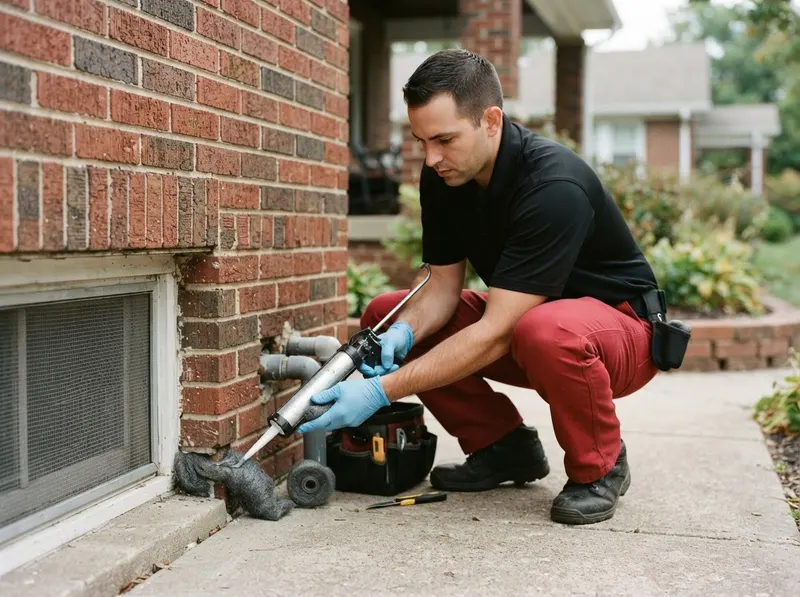
Norway rats and white-footed mice exploit architectural voids as small as one-quarter inch to contaminate food preparation zones, sever electrical wiring, and shred fiberglass attic insulation. Technicians conduct complete exterior and interior surveys aligned with guidelines from the Centers for Disease Control and Prevention , deploying heavy-gauge galvanized steel mesh, copper mesh packing, and metal-infused polyurethane compounds across weeping holes, crawlspace vents, and foundation rim penetrations. Interior populations are trapped and eliminated using high-tension mechanical capture arrays in attic crawlways and basement perimeters, completely avoiding open rodenticide baits that risk indoor carcass decomposition and secondary exposure to household domestic pets.
Get a quote →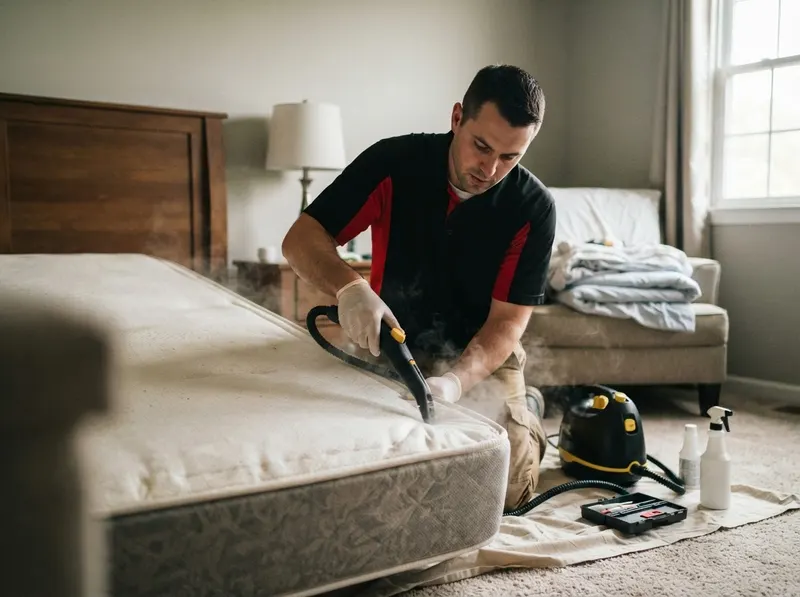
Bed bug (Cimex lectularius) infestations severely disrupt sleep cycles and inflict chronic bites across interior living quarters, nesting in mattress seams, behind baseboards, and within electrical junction boxes. Technicians execute an integrated eradication protocol utilizing localized thermal heating units calibrated above 122 degrees Fahrenheit alongside dual-action residual insecticides and insect growth regulators documented by the National Pest Management Association . This multi-phase strategy penetrates minute wall harborages, mattress tufts, nightstands, and deep fabric folds, destroying all developmental stages from viable eggs to reproductive adults. Follow-up monitoring includes active carbon dioxide bait traps and visual void inspections 14 to 21 days post-treatment to verify complete biological elimination.
Get a quote →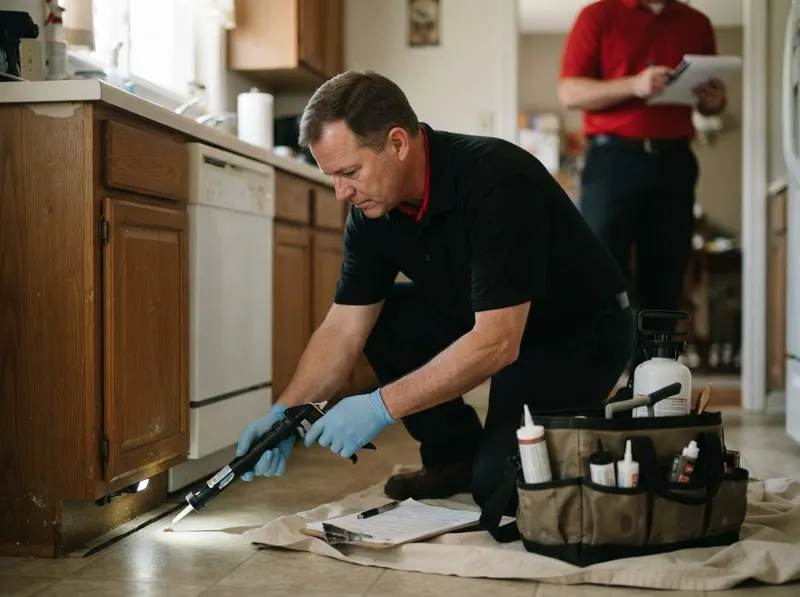
German and American cockroaches harbor in warm, humid kitchen voids, bathroom pipe chases, and commercial food preparation areas, vectoring dangerous pathogens such as Salmonella and E. coli while triggering indoor asthma allergens. Remediation involves applying advanced gel bait matrices containing chitin synthesis inhibitors directly into dark void harborages, plumbing chases, and under refrigeration compressors. In severe infestations, micro-aerosol applications of insect growth regulators force nymphs into premature, sterile molting cycles. Structural exclusion protocols include caulking baseboard gaps, sealing sub-sink pipe collaring, and installing physical door sweeps to cut off inter-room travel routes through wet utility corridors.
Get a quote →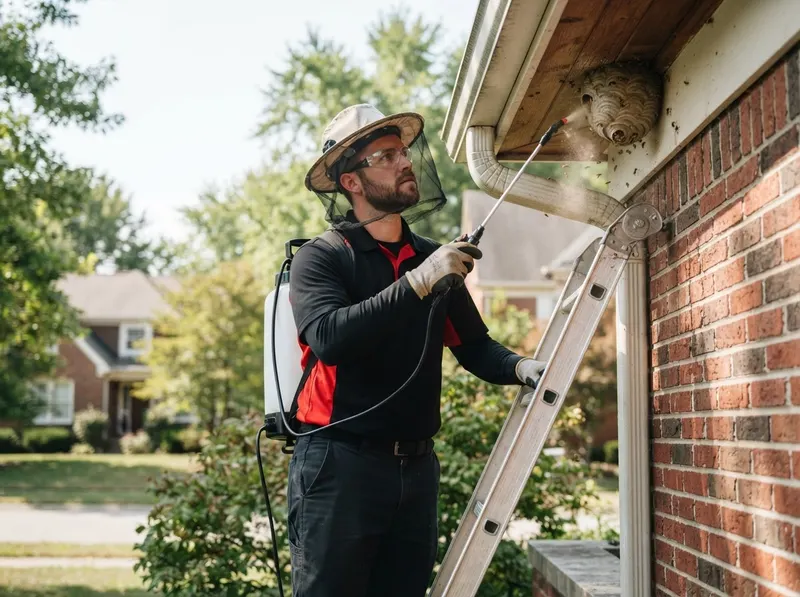
Yellowjackets, paper wasps, and bald-faced hornets construct expansive aerial and subterranean carton nests under roof eaves, deck framing, soffits, and exterior wall cavities throughout the humid summer months. Field operators utilize specialized protective equipment adhering to standards established by the Occupational Safety and Health Administration , delivering targeted pressurized micro-aerosol knockdown agents directly into the central nesting core after dusk when foraging insects return. Once defensive swarms are neutralized, technicians physically detach the comb structure, mechanically scrape attachment points, and treat the residual substrate with micro-encapsulated deterrents to discourage opportunistic secondary queens from rebuilding in the identical architectural location.
Get a quote →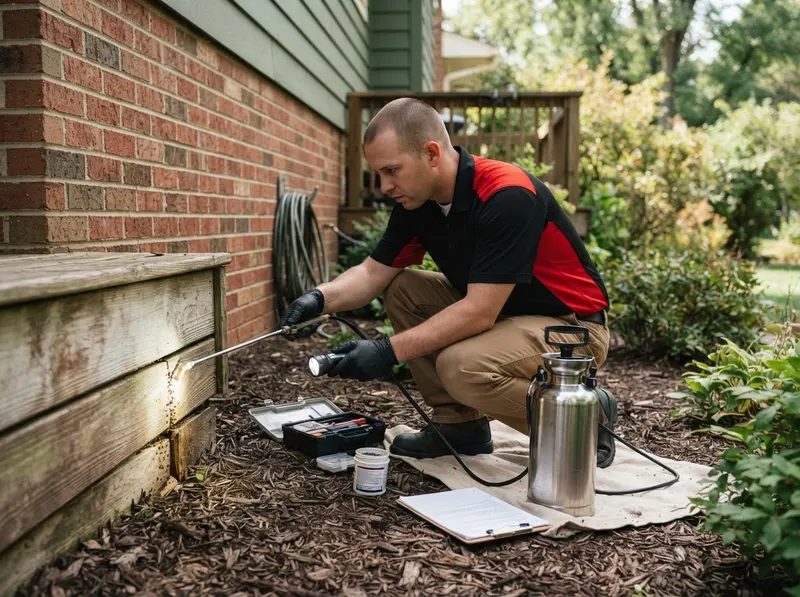
Black carpenter ants (Camponotus pennsylvanicus) excavate extensive smooth nesting galleries directly inside damp structural framing, window headers, roof eaves, and insulated wall assemblies, degrading the load-bearing integrity of wood framing. Our protocol identifies primary mother colonies nested in exterior moisture zones along with interior satellite nests situated behind bathroom tile or under roof leaks. Technicians inject precision pyrethroid dust formulations into active interior wall voids while applying non-repellent liquid perimeter barriers to sever exterior foraging trails that originate from overhanging branches and dead wood roots, halting gallery expansion and timber destruction permanently.
Get a quote →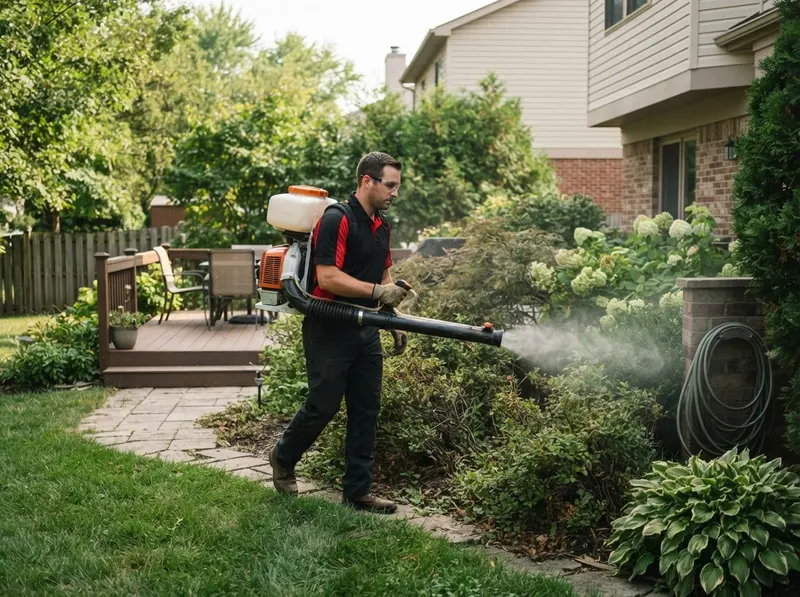
Stagnant drainage and shaded ornamental vegetation provide ideal breeding conditions for Culex and Aedes mosquitoes, vectors of West Nile virus and encephalitis throughout the Scioto and Olentangy river valleys. Technicians deploy calibrated mist blowers to apply micro-encapsulated botanical-derived adulticides along the undersides of dense foliage canopies, shaded deck undercrofts, and fence borders where adult mosquitoes rest during daylight hours. Concurrently, slow-release biological larvicides containing Bacillus thuringiensis israelensis are placed in unmovable standing water reserves, bird baths, and bioswales to break the mosquito life cycle without impacting non-target wildlife or beneficial pollinators.
Get a quote →Blacklegged ticks (Ixodes scapularis) and American dog ticks inhabit the transitional ecotones between manicured lawn turf, leaf litter buffers, and untreated timberlines, presenting serious Lyme disease exposure risks to occupants and domestic pets. Barrier applications establish a continuous perimeter defense band using synthetic pyrethroids applied through high-pressure spray rigs along shaded turf margins, ornamental groundcovers, and stone walls. Treatment cycles coincide with the peak questing phases of nymphal ticks during late spring and adult ticks in the autumn months, providing steady biological knockdown across property margins and family recreation corridors.
Get a quote →You get a firm, itemized quote for your pest control service before any work begins, no surprises, no pressure.
Careful prep, tidy work, and a full cleanup when we are done. We treat your home and belongings like our own.
The same trusted, background-checked team from the first call to the final check.
Property defense strategies depend entirely on whether an infestation is active within interior walls or migrating across exterior property lines. If an infestation is actively nesting within wall voids, floor joists, or subflooring, such as bed bugs, carpenter ants, German cockroaches, or nesting rodents, choose interior remediation paired with forensic physical exclusion. This methodology applies micro-injections of non-repellent transfer agents and insect growth regulators directly into harborage chasms while sealing all mechanical access points with heavy-gauge galvanized hardware cloth and elastomeric sealants.
If the primary objective is preventing seasonal incursions of vector-borne pests like ticks and mosquitoes, or repelling crawling perimeter invaders such as odorous house ants and brown marmorated stink bugs, choose an exterior multi-zone perimeter defense. The trade-off centers on mechanical containment versus continuous chemical suppression: interior exclusion permanently resolves architectural vulnerabilities and denies re-entry through foundation penetrations and mortar voids, whereas exterior barrier management relies on scheduled seasonal replenishments to combat the natural atmospheric breakdown of protective residues caused by precipitation and ultraviolet sunlight exposure. Combining both protocols establishes a comprehensive multi-tier barrier that protects structural timbers, interior breathing zones, and surrounding turf perimeters simultaneously.
Every project gets a firm, written price after a free on-site visit. Ranges below for orientation.
Tell us about your pest control service job and we'll send a clear, written quote, usually the same day. Or just call and talk to a real Columbus pro.
(380) 255-6007
Columbus properties face acute biological pressures driven by the confluence of the Scioto and Olentangy rivers, aging historical building envelopes, and prolonged summer humidity throughout Central Ohio. In historic districts such as German Village, Victorian Village, and Olde Towne East, late-nineteenth-century masonry structures feature porous lime mortar, stone rubble foundations, and uninsulated crawlspaces that provide direct subterranean highways for Norway rats and house mice migrating from nearby riverbanks and storm sewer networks. Meanwhile, mature hardwood tree canopies across Clintonville, Upper Arlington, Bexley, and Worthington drop dense layers of organic detritus against rooflines, soffits, and foundation beds, promoting excessive moisture retention that accelerates subterranean termite colonies and wood-destroying carpenter ants. Low-lying floodplains in Franklinton and Grandview Heights experience prolonged standing water tables following spring rainstorms, triggering rapid early-season mosquito hatching cycles along the Scioto Mile Promenade and residential properties adjacent to Goodale Park. Effectively defending these diverse architectural styles across Franklin County requires tailored physical exclusion tactics, sealing structural limestone voids with copper wire mesh and hydraulic cement while applying specialized perimeter non-repellents capable of withstanding the region's intense freeze-thaw cycles and clay-rich soil conditions.
Free estimates for Columbus & the surrounding area.
 EmberVale Exterminators