Pantry infestations compromise household sanctuaries by spoiling pantry provisions and distributing larvae through cabinetry framework. In dense Columbus residential pockets, such as timber-framed Victorian homes in…
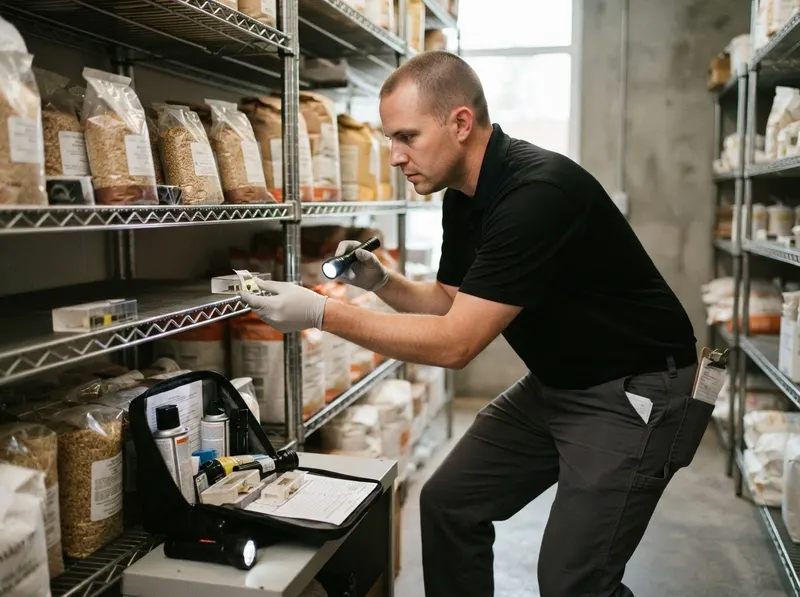
Pantry infestations compromise household sanctuaries by spoiling pantry provisions and distributing larvae through cabinetry framework. In dense Columbus residential pockets, such as timber-framed Victorian homes in Victorian Village and brick foundations across German Village, structural gaps around trim allow insect populations to migrate deep behind wall cavities once dry provisions become compromised. Species like the Indianmeal moth (University of Kentucky Department of Entomology) and the sawtoothed grain beetle (University of Florida IFAS) penetrate sealed cardboard packaging and thin plastics, laying microscopic eggs directly inside flour, cereal, dry pet food, and bulk grains. Surface pesticide spraying fails against these interior invaders; effective containment demands locating the isolated contamination focus, mechanically sanitizing the substrate, and establishing definitive physical barriers.
EmberVale Exterminators executes a five-step diagnostic framework across Franklin County properties. 1. Technicians log and inspect every susceptible item using guidelines established by the USDA Agricultural Research Service to determine insect life stages and breeding hubs. 2. Infested foodstuffs are isolated into sealed 6-mil poly liners for immediate off-site extraction. 3. Empty shelf perimeters, peg holes, drawer slides, and corner millwork receive HEPA vacuuming calibrated to remove microscopic larvae and silk webbing. 4. Wall voids, under-cabinet toe-kicks, and trim seams receive micro-injected botanical desiccant dusts formulated per the United States Environmental Protection Agency safety benchmarks. 5. Species-specific pheromone lure monitors compliant with standards from the National Pest Management Association are positioned across food storage shelves to track potential secondary emergence without coating food-prep counters in chemical residues.
In older multi-unit residences across the Short North Arts District and single-family structures in Upper Arlington, pantry pests often cross plumbing chaces and wiring passthroughs to colonize adjacent rooms. Standard retail traps utilize indiscriminate attractants that lure external insects indoors without resolving the resident larvae behind the baseboards. Structural barrier restoration closes these pathways using silicone sealants conforming to ASTM International movement metrics and non-corrosive stainless steel wool mesh behind switch plates, as outlined by the USDA National Institute of Food and Agriculture. This operational barrier preserves food security for properties along High Street and keeps food prep zones compliant with sanitary thresholds set by the Columbus Public Health department.
Commercial food-handling spaces and high-volume dry storage facilities near Franklinton and Grandview Heights demand strict adherence to federal monitoring policies. Service records align with regulations managed by the Food and Drug Administration under Title 21 of the Code of Federal Regulations, alongside agricultural guidelines monitored by the Ohio Department of Agriculture. Technicians isolate pest infestations down to individual bin fixtures, validating complete lifecycle arrest before food staging areas resume active operations.
Every job gets a firm, written price after a free on-site visit.
Tell us about your stored product pest control job in Columbus and we'll send a clear, written quote, usually the same day.
 EmberVale Exterminators