Domestic cockroach infestations in Central Ohio stem primarily from two distinct biological vectors requiring diametrically opposed eradication strategies. German cockroaches establish colonies indoors near warmth,…
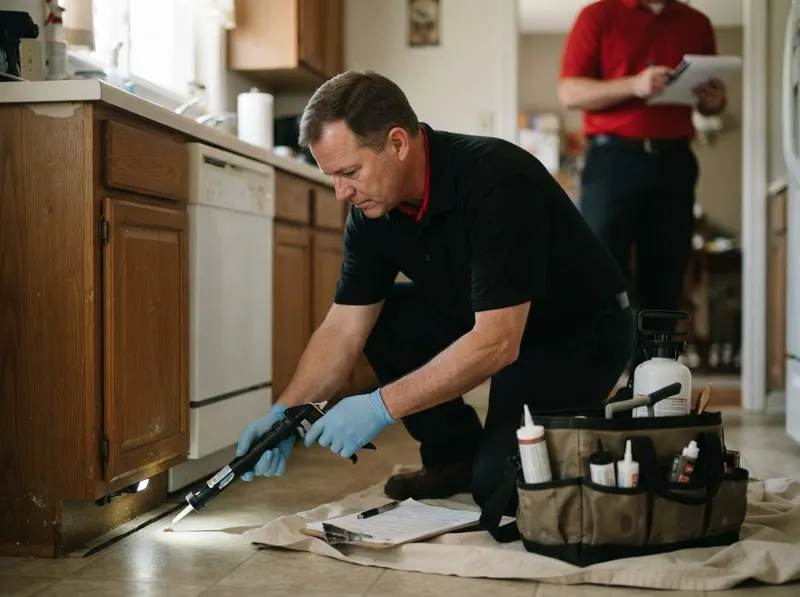
Domestic cockroach infestations in Central Ohio stem primarily from two distinct biological vectors requiring diametrically opposed eradication strategies. German cockroaches establish colonies indoors near warmth, moisture, and plumbing junctions, whereas American and Oriental cockroaches typically migrate upward from damp subterranean infrastructure, masonry voids, and municipal utility lines. EmberVale Exterminators executes a clinical cleanout rather than indiscriminate perimeter spraying. Baseboard chemical flooding often triggers behavioral scatter, driving females deeper into structural wall cavities. Instead, technicians deploy targeted non-repellent formulations alongside EPA-registered insect growth regulators (IGRs) that interrupt the chitin synthesis cycle, preventing nymphs from reaching reproductive maturity as defined by the Ohio State University Department of Entomology. Laboratory-grade gel matrices are micro-injected into cabinet hinges, motor housings, and utility penetrations where aggregation pheromones concentrate, ensuring feeding uptake throughout the harborage.
Structural age and architectural styles across Franklin County directly dictate pest pathways. In high-density rental corridors like Victorian Village and the Short North Arts District, shared partition walls and multi-unit plumbing chases allow roaches to migrate between adjacent apartments. Older historic homes in German Village and Olde Towne East feature rubble foundations, unsealed crawl spaces, and soft mortar joints where Oriental roaches congregate near damp subflooring. Conversely, sprawling mid-century ranch foundations in Upper Arlington, Clintonville, and Bexley frequently experience American cockroach intrusions originating around floor drains and mechanical utility trenches. Technicians map these access points, applying botanical void dusts inside dry sheetrock and sealing pipe flanges with silicone foam to block movement corridors. Moisture diagnostics align with standards established by the CDC Healthy Homes program to minimize localized allergen loads produced by roach exuviae and frass.
Treatment selection balances immediate knock-down velocity against chemical impact inside living environments. Heavy infestations with oothecae (egg cases) present require a sequential protocol: an initial forensic harborage flush, targeted vacuum extraction using HEPA filtration to eliminate cast skins and live adults, followed by precision gel placement. This strategy avoids airborne particulate drifts, adhering to containment guidelines from the National Pest Management Association and residential safety thresholds outlined by OSHA. Eradication of established populations necessitates a scheduled follow-up inspection at day 14 to day 21, timed precisely to intercept freshly hatched nymphs before their reproductive organs develop. When dealing with mixed-use structures in Grandview Heights, Franklinton, or Worthington, remediation protocols adhere to pest baseline requirements verified by the Ohio Department of Agriculture Plant Health Division and the Columbus Public Health Department. Technical standards for plumbing seals reference IAPMO Uniform Plumbing Code structural integrity rules, while waste management remediation follows directives from SWACO to eliminate secondary organic attractants.
Every job gets a firm, written price after a free on-site visit.
Tell us about your cockroach eradication job in Columbus and we'll send a clear, written quote, usually the same day.
 EmberVale Exterminators